3PLs
A 3PL TMS for the loads you broker to outside carriers
FreightVero runs the brokerage desk of a 3PL: load entry, carrier booking, rate cons, tracking and the billing queue. Multi-branch divisions and EDI are planned, and we say so up front.
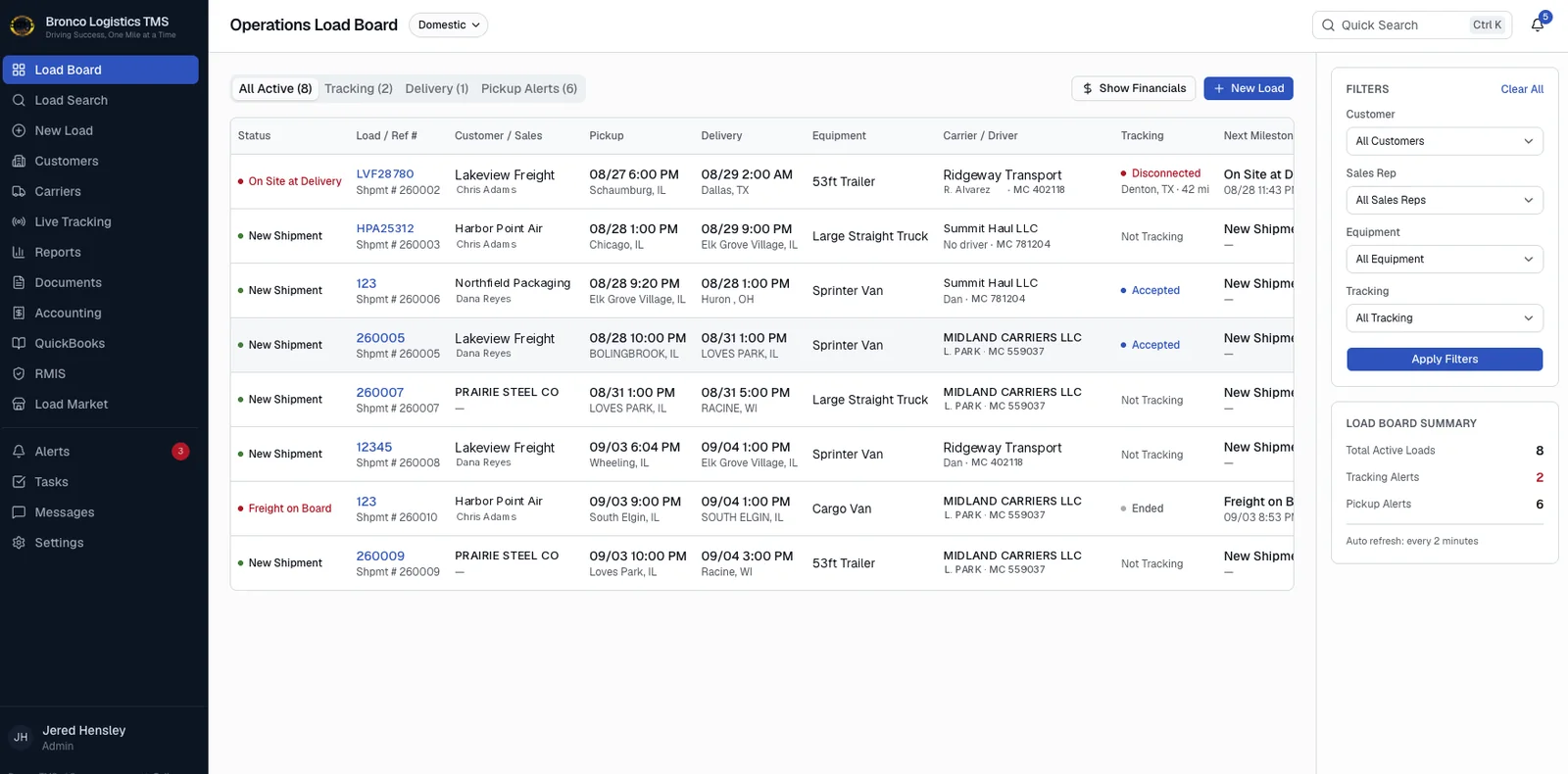
One customer promise, many moving parts
A 3PL sells a shipper one relationship. Behind it sit warehouse staff, account managers, a brokerage desk covering loads with outside carriers, and a billing team reconciling all of it.
The brokerage desk carries a lot of the risk. A carrier with a lapsed compliance status gets booked. A reefer load leaves without a signed rate con. A contract customer needs a BOL and POD on every invoice, and one goes out without the BOL.
FreightVero starts from the load. It was built inside a working brokerage, and every rule about what a load needs before it moves runs inside the database.
Where FreightVero fits in a 3PL
- Brokered truckload and small-vehicle freight, from cargo vans and straight trucks to 53-foot trailers, reefers and flatbeds.
- Domestic delivery legs of air freight, run as a load with pickup and delivery stops.
- Customers with their own paperwork rules for billing.
It isn’t a warehouse management system. If your 3PL also runs its own trucks, see the Carrier TMS, which is in early access.
What the brokerage desk of a 3PL gets
Live features first. Early access, in development and planned items are labeled.
Checkpoints enforced in the database Live
A load can’t reach Alerted without a carrier whose compliance status is approved, or Carrier Dispatched without the latest rate con signed. The app, an integration and a direct database write all hit the same rule.
Customer billing rules on every load Live
Each customer’s paperwork rules are copied onto the load when it’s booked. The load is billed under the rules that applied that day.
Seven equipment types Live
Cargo van, sprinter van, small truck, large straight truck, 53-foot trailer, reefer and flatbed.
Live tracking through Load Market Live
Send a tracking request to the driver’s phone from the load. ETA from the truck’s last position, checked against the carrier’s appointment. Green, yellow, red.
Append-only audit log Live
Who changed what, when, and the before and after values. Useful when a shipper asks what happened on a load three weeks ago.
Customer portal Early access
Designed to give your shippers a view of their own load status. In early access.
QuickBooks Online In development
Connection work is underway. Invoice and bill sync are not built yet.
EDI and multi-branch Planned
EDI tenders and status messages, plus separate branch or agent divisions, are planned. Neither exists in the product today.
Every tracked load, sorted by risk
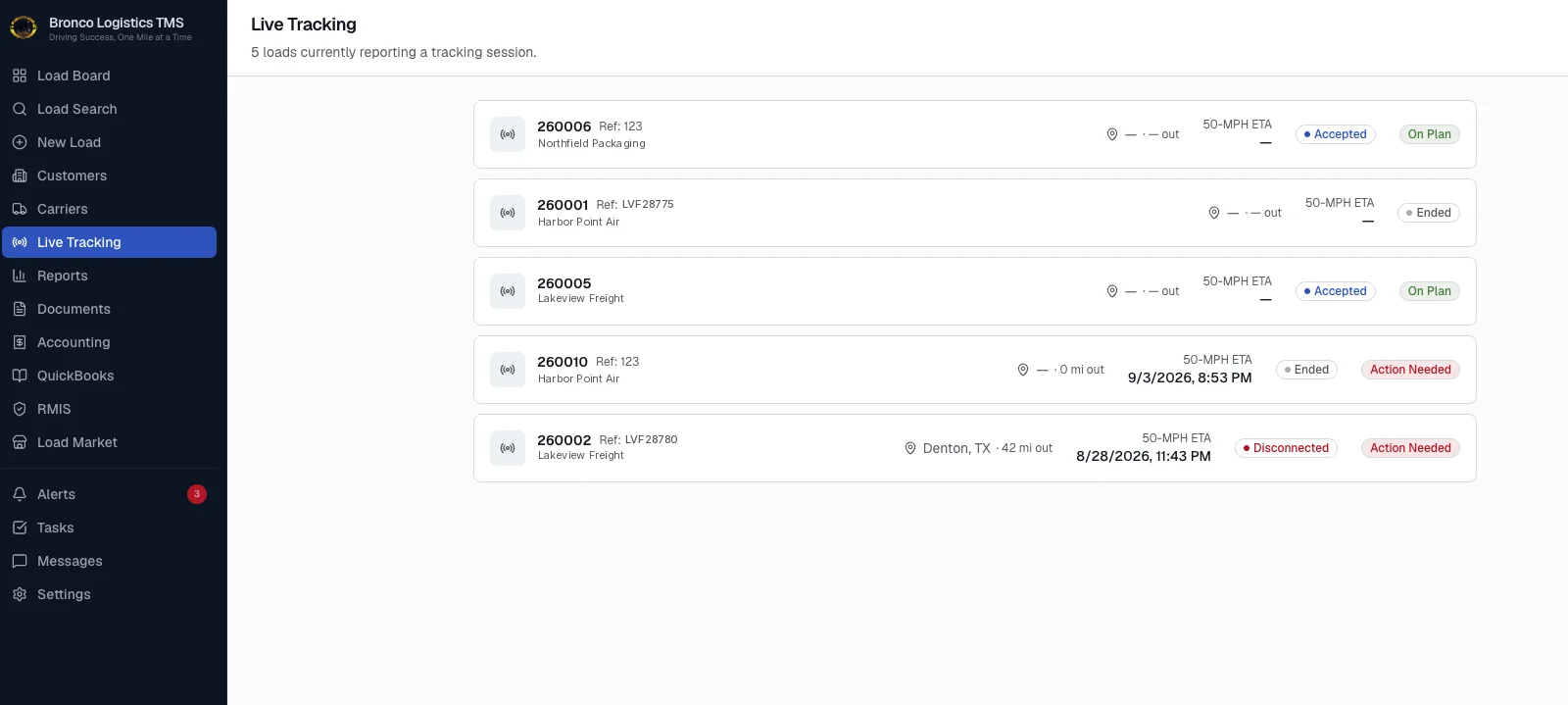
Account managers at a 3PL get the “where’s my truck” call first. The live tracking list shows each tracked load with an On Plan or Action Needed badge, so they can answer from one screen.
Tracking that goes quiet for 45 minutes gets flagged. When the load delivers, tracking ends on its own.
- ETA checked against the carrier’s appointment
- Driver change keeps the tracking history
- Tracking disconnects raise an alert on the load
Need something we haven't built
Some 3PLs need workflows no packaged TMS covers. FreightVero also builds custom TMS software, quoted after a scoping call. The broker TMS itself went from its first database migration on Aug 28, 2026 to live Load Market tracking on Sept 3, 2026. See custom TMS development.
Show us how your brokerage desk runs
We’ll map your loads against what’s live today and be clear about what isn’t.
Frequently asked questions
Does FreightVero support EDI 204 load tenders and EDI 214 status updates?
Can we run separate branches or agent offices?
Multi-branch and agent divisions are planned and not built. Today a company works in one workspace with four roles: Admin, Operations, Sales and Billing. Each company's data is isolated at the database level.
Is there an API for our other systems?
No public API exists yet. It's planned. For a 3PL that needs FreightVero to talk to a warehouse system or a customer platform today, custom development is the route, quoted after a scoping call.